Services Old Nurses Uniform Surgical Services Old Dental Equipment Intensive Care Services Obstetric Services Central Sterilize Section Medical Equipment Section Radiology Section Hemodialysis Section Laboratory Section Pharmacy Section Public Health Section
Laboratory Section
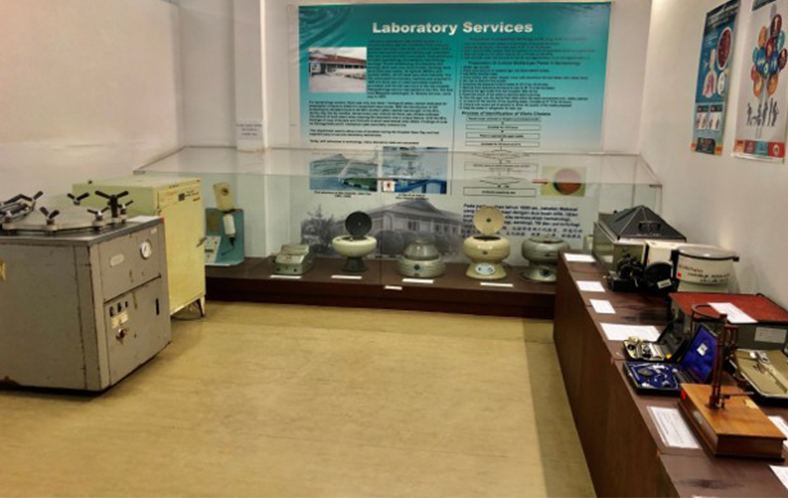
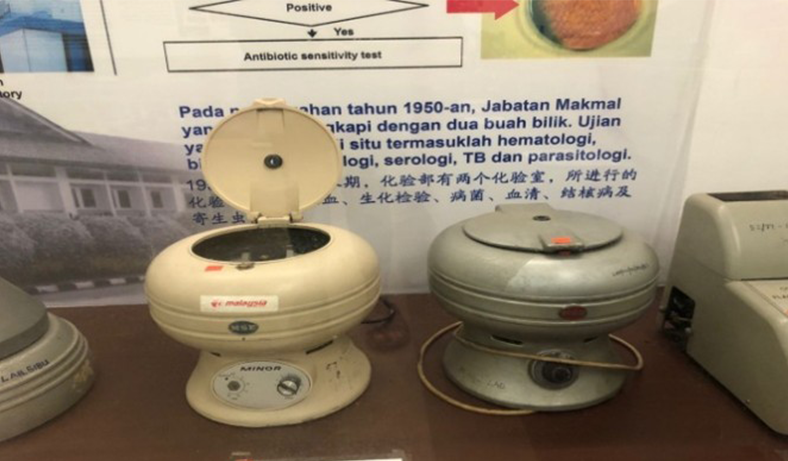
The laboratory was originally located in a wooden building near the outpatient card room and was relocated several times before a permanent concrete laboratory building was constructed in the mid to late 1950s. The laboratory initially consisted of two rooms, with additional spaces added later.
Laboratory services included hematology, biochemistry, bacteriology, serology, tuberculosis, and parasitology. During that period, most tests were performed manually, with biochemical and serological tests being limited mainly to WIDAL testing for typhoid and VDRL testing for syphilis. The first automated biochemical analyzer was purchased in 1989, and further automation was only introduced after the laboratory moved to the new Sibu Hospital.
Histopathology services began in the 1970s, with the arrival of Sarawak's first native Malaysian pathologist, Dr. Murphy Duncan, in 1978. A first-class biosafety cabinet was used mainly for preparing sputum samples suspected of tuberculosis. Another safety cabinet was later acquired in the 1990s for HIV screening of donated blood.
The laboratory also played an important role in diagnosing infectious diseases, including seasonal cholera outbreaks and parasitic infections such as roundworm, whipworm, Strongylids, and Entamoeba histolytica. During Hospital Open Days, the department attracted many students and inspired some to pursue careers as laboratory technicians. Today, with advances in technology, many laboratory tests are performed using automated systems.
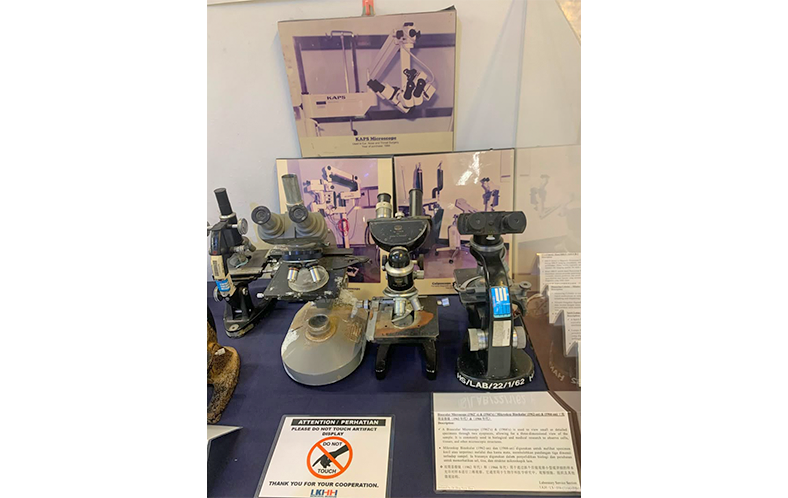
Some of the laboratory instrument displayed at the Lau King Howe Hospital Memorial Museum.
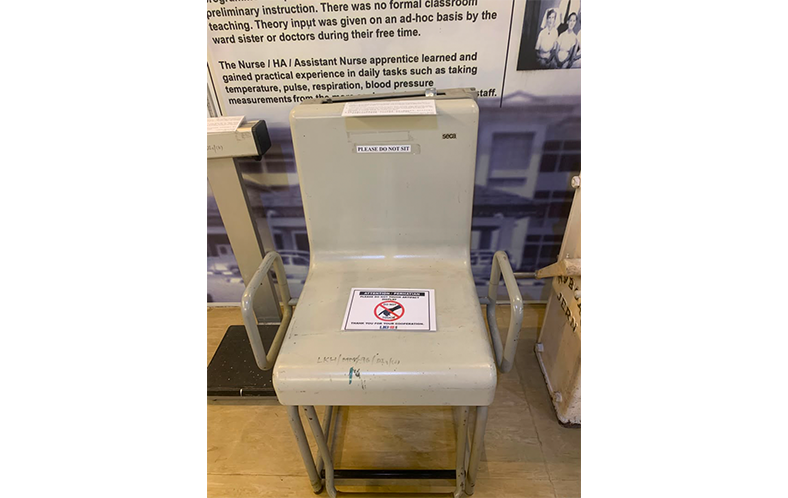
A chair weighing scale is used to measure the weight of individuals who cannot stand, such as elderly or disabled patients. The person sits in the chair, and the scale provides an accurate weight measurement. It is commonly used in hospitals, clinics, and nursing homes.
Many more laboratory instrument can also be discovered throughout the museum, offering visitors further insight into the evolution of healthcare practices and medical history.
© Copyright 2011 THE LAU KING HOWE HOSPITAL MEMORIAL MUSEUM ASSOCIATION, SIBU. All Rights Reserved.