Biography of Lau King Howe


After completing his education at Methodist Anglo-Chinese College, Foochow, Mr. Lau King Howe entered the Manila Teacher Training College in the Philippines where he graduated with honour. He worked in USA Philippines Navy Base as an administrator, and subsequently became the principal of the Philippines Chinese School. He returned to China in 1914, and he was appointed as the Chief Secretary, and later in September of the same year as Acting Manager of Si Chuan Salt Affairs Audit Department. He then resigned from government service and became a businessman in Shanghai.
In 1916, Mr. Lau King Howe arrived in Sibu to seek better opportunities. He had 3 sons from his previous marriage.

Mr. Lau King Howe and his wife Mrs. Fu Bao Yu


Letter from chief secretary to J.M. Hoover

Power of Attorney from Lau King Howe to Hoover and Lim Khai Cheng

Old picture of Lau King Howe Hospital


Lau King Howe Hospital


Lau King Howe Hospital Memorial Museum before renovated

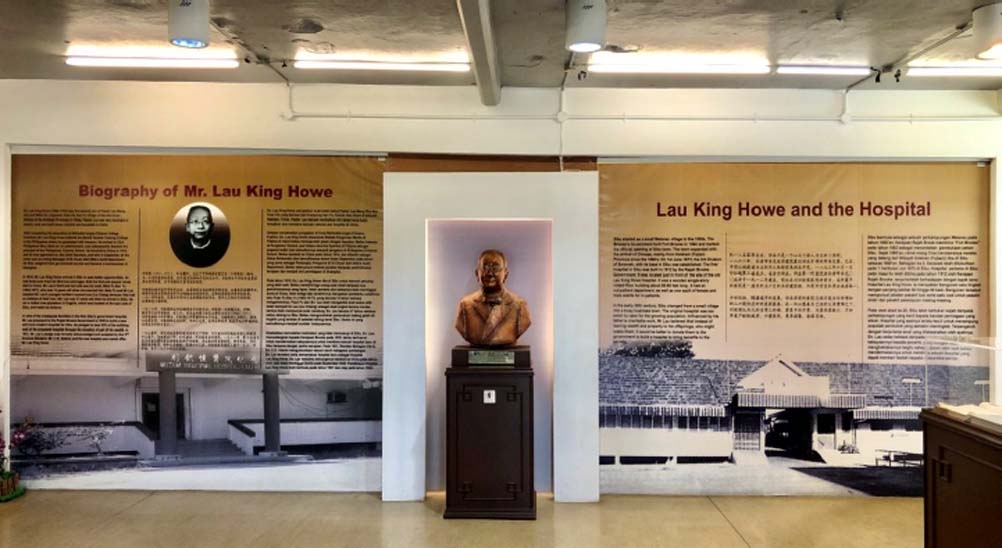
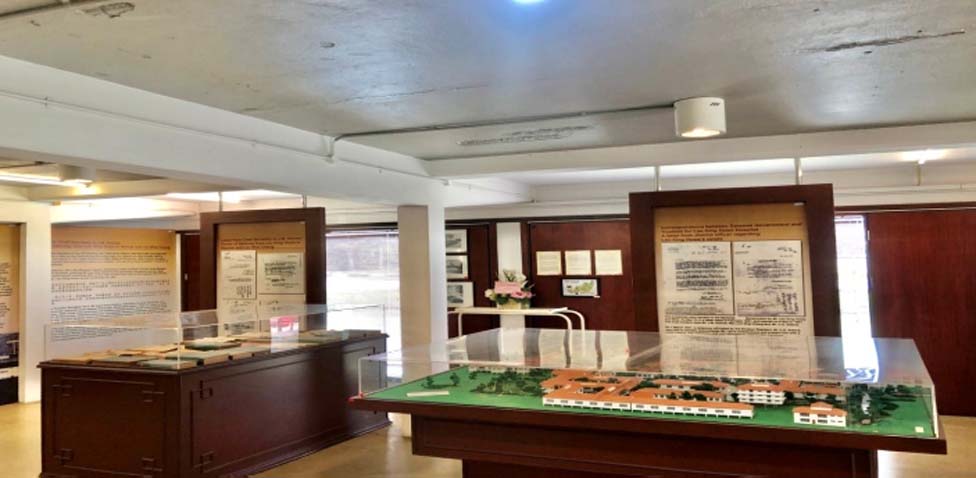
June 2005, the remains of Lau King Howe Hospital totally demolished due to the development project of Sibu Town Square Phase 2. The Lau King Howe Hospital Memorial Museum renovated and reopens to public since December 04, 2008.
written in the 1960s
Mr. Lau King Howe, who had a kind and generous heart, was also a devoted Christian. In 1916, he came to Sibu, Sarawak, where he managed a rubber plantation. In order to improve medical services in Sibu, in 1930, after consulting Rev. James M. Hoover and Rev. Lim Khai Cheng, he expressed his willingness to donate all his property to the Government for the establishment of a large and modern hospital to benefit the people of Sibu. He later wrote to Mr. C. D. Adams, the Resident of the Third Division, Sibu, Sarawak, regarding this donation. Mr. Adams then sought the advice of the Rajah of Sarawak on the matter. On 22 November 1930, Mr. J. C. Swayne, the Chief Secretary of the State of Sarawak, replied accepting the donation and promised that the proposed hospital would be named Lau King Howe Hospital.
On 7 March 1931, Mr. Lau King Howe was honoured by Mr. Charles Vyner Brooke, the Rajah of Sarawak, who presented him with a commemorative metal plaque in recognition of his generosity. Later, as Mr. Lau wished to return to China, he and Mr. Adams authorized Rev. James M. Hoover and Rev. Lim Khai Cheng to manage all the donated property and to oversee the completion of the proposed hospital. In May 1931, Mr. Lau retired and returned to China. The following year, he passed away in October 1932.
With the aim of improving social welfare, as mentioned above, Mr. Lau King Howe donated his property for the establishment of a large and modern hospital in Sibu. In appreciation of his generosity and contribution, the Government named the hospital Lau King Howe Hospital as a lasting memorial to his kindness and public spirit. I have written this account so that future generations may better understand how the hospital received its present name.